
Your Life Called. It Wants Creative Control Back. | Tony Suriano
Your Life Called. It Wants Creative Control Back.
You wouldn’t hand a stranger your car keys because they had a strong opinion about where you should go. Yet somehow, we let people with Wi-Fi and a ring light steer our entire afternoon.
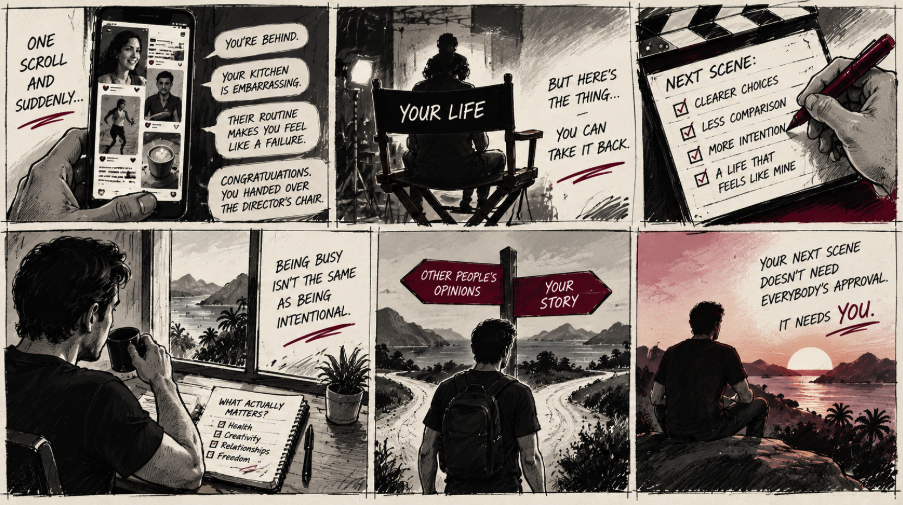
One scroll, and suddenly your career is behind, your kitchen is embarrassing, and somebody’s morning routine has you feeling like a failure before breakfast. Congratulations. You woke up starring in your own life and handed the director’s chair to a guy selling mushroom coffee.
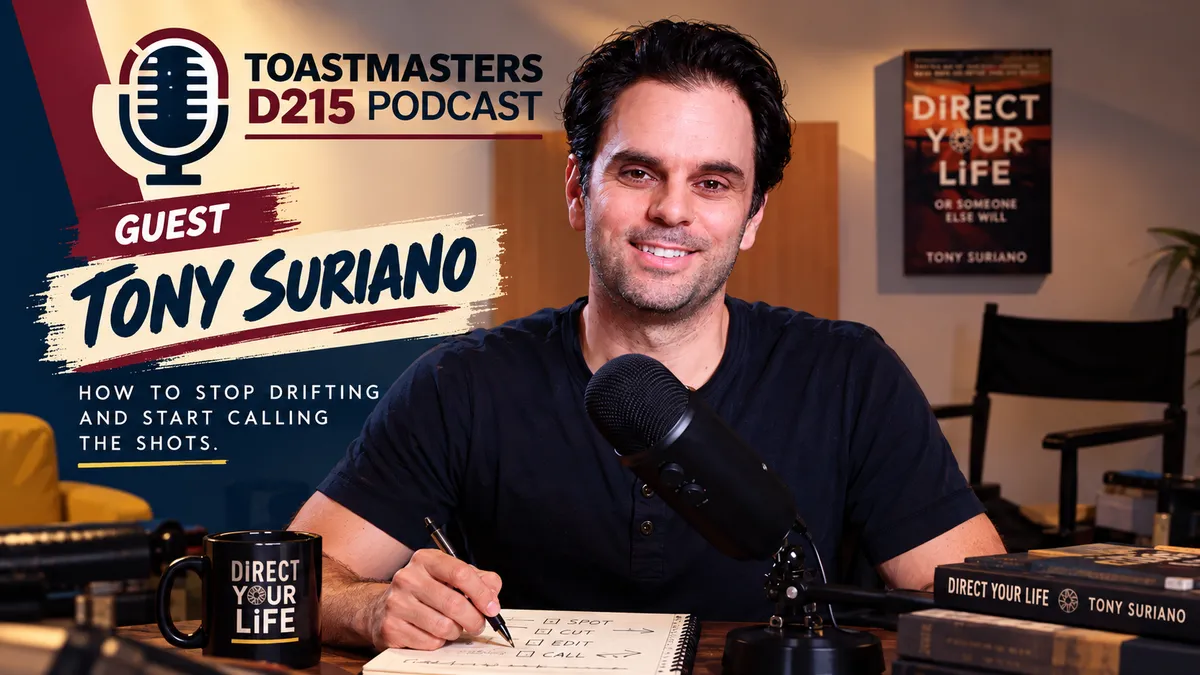
I recently joined a podcast as a guest to talk about how we take that chair back. We explored intentional living, storytelling, and my SoulCut framework—the connection between editing a film and making choices you can actually stand behind.
The episode is coming soon. I’ll update this post with the interview once it’s live. In the meantime, go to DirectYourLifePodcast.com and follow my podcast to stay connected.
Until then, here’s a little of what we got into.
Drifting Can Look a Lot Like Being Productive
You can answer every email, check every box, and still spend the day moving in a direction you never chose. Being busy gives you something to point to. Being intentional asks a more uncomfortable question: Is any of this taking me where I want to go?
That’s where drifting sneaks in. Other people’s opinions get louder. Comparison starts making decisions. You keep saying yes because explaining your no sounds exhausting.
I don’t think the answer is to magically become a person who never gets distracted. I think it starts with catching yourself. Write down what’s taking up space in your head. Journal without trying to sound profound. Talk to a friend you trust enough to hear an honest answer from.
Sometimes the most useful thing you can write is, “I keep saying this matters to me, but my calendar says otherwise.”
There’s a scene worth looking at.
Give Your Life an Edit
As a filmmaker, I know a scene can take time, effort, and energy to create—and still not belong in the final movie. Keeping it because you worked hard on it doesn’t make the film better. It makes the film longer.
We do that with our lives, too. We keep habits, commitments, and old expectations because we’ve already invested so much in them. Meanwhile, the story we actually want to tell keeps waiting for room.
That’s the idea behind SoulCut, the four-part framework we discussed:
Spot the Bad Scene. Identify what isn’t working. Get specific. “Everything is a mess” gives you very little to work with. “I spend my first hour online and start every day comparing myself to strangers” gives you somewhere to begin.
Cut It Out. Decide what needs to go. Maybe it’s a habit. Maybe it’s an unnecessary commitment. Maybe it’s the automatic yes you keep giving when you already know the answer. A cut can be small and still change the whole scene.
Edit for Truth. Look at what remains and make it more honest. Does this choice reflect what matters to you now? Or are you still performing a version of yourself you outgrew three years ago?
Lock the Cut. Commit to the choice and move into the next scene. You can learn and adjust as you go. But endlessly reconsidering your life is a pretty effective way to avoid living it.
These ideas are part of the work I explore in my book, Direct Your Life or Someone Else Will. You don’t need a flawless script to begin. You need to make the next decision with your eyes open.
Stop Making Joy Wait for a Bigger Budget
We also talked about success, and how easy it is to keep moving it somewhere we haven’t arrived yet.
I’ll feel successful when I make more money. I’ll pursue that idea when things settle down. I’ll enjoy myself when I’ve earned it.
Money matters. So does paying your bills. But if every meaningful part of your life requires a future financial milestone before it can begin, you’ve given yourself a very expensive permission slip.
I think success includes growth. It includes being present enough to experience the life you’re working so hard to build. You can pursue something bigger and still let today count.
Otherwise, you could reach the goal and discover you’ve gotten really good at postponing the celebration.
Your Story Doesn’t Need an Explosion
Another part of our conversation was about storytelling—and the belief that your story needs to be extraordinary before anybody should hear it.
You don’t need to survive a helicopter crash to have something useful to say. Please keep the helicopter intact.
A small mistake, an awkward conversation, or a moment when you changed your mind can give someone else exactly what they need. The question is what the experience taught you, and whether sharing it could help another person see their own situation differently.
That’s why stories matter in professional communication, too. Facts provide information. A story gives that information a situation, a consequence, and a reason to care.
If you want to get better at telling yours, record yourself. Then watch it back from a director’s perspective. Where does the story begin? Where do you lose the point? What extra explanation could you remove so the useful part lands?
Yes, watching yourself can feel awkward. You may discover a hand gesture that apparently has its own agent. Let yourself laugh, make an adjustment, and try again.
The goal is to communicate clearly enough that someone can connect with what you’re saying.
Choose One Scene Today
You don’t have to overhaul your entire life by dinner. Pick one place where you’ve been drifting and make one deliberate choice.
If you want a place to start, grab my free Direct Your Day director’s sheet. It’s a one-page check-in to help you notice where your attention is going and decide where you want it to go next.
And when you’re ready to go deeper, you can find Direct Your Life or Someone Else Will here.
I’ll share the full podcast conversation here once the episode is live. In the meantime, follow my podcast at DirectYourLifePodcast.com so you don’t miss the release update and future conversations.
Your next scene doesn’t need everybody’s approval.
It needs a director. You.


